Shopify Bulk Meta Descriptions: How to Generate at Scale
On this page
Shopify Bulk Meta Descriptions: How to Generate Meta Titles and Descriptions for Every Product
Most Shopify product pages are missing their meta title and meta description. Not because merchants don't understand SEO. They do. But writing 300 characters of meta content per product, across a catalogue of 500 products, takes over 40 hours if you do it carefully. So it doesn't get done, and the product title fills in as the default.
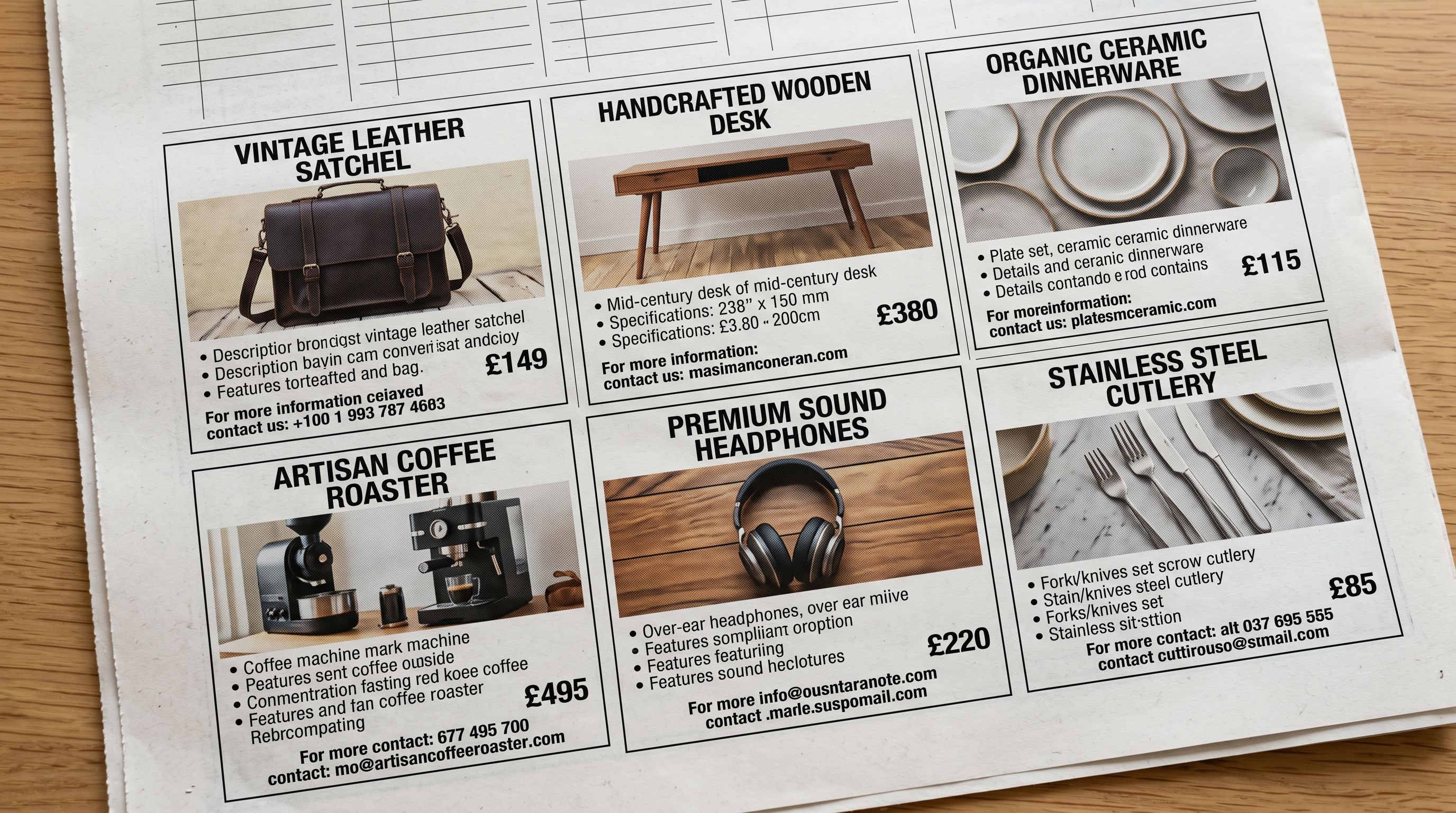
The result is a store where every product's Google listing shows the same structure: product title, a pipe character, your shop name, then a truncated snippet pulled from the product description. No keyword targeting. No buyer-facing copy. No call to action in the result.
This guide covers what Shopify actually does with these fields, why they're worth filling correctly, and how to generate Shopify bulk meta descriptions in a single batch run across an existing catalogue.
The Shopify Product Title and Meta Title Are Not the Same Field
Shopify stores product data in two separate fields: the product title and the SEO title (also called the meta title). These are not interchangeable, and Shopify treats them differently in search results.
The product title is what appears on the product page itself: the H1 heading, the checkout line, the order confirmation. The meta title is what Google shows as the blue clickable link in search results. If no meta title is set, Shopify falls back to the product title plus your shop name, which produces a result like "Blue Ceramic Mug 400ml | Your Store Name."
The product name is there, but there is no room for a keyword or a phrase that matches what the buyer actually searched for.
The meta description is a separate 160-character field. If it is left blank, Google typically pulls the opening sentence of the product description. That sentence was written to describe the product on the page, not to act as a search result snippet. The result is often a truncated technical spec or "In stock. Ships within 3-5 business days." Neither generates clicks.
Why Meta Fields Are Blank on Most Shopify Catalogues
For a 50-product store, filling in meta titles and descriptions is a half-day task. For a 500-product store, it is a project.
Each meta title needs to be 50-60 characters, include the primary keyword, and remain distinct from adjacent products in the same range. Each meta description needs to fit within 160 characters, read as a natural sentence to a buyer, and include a secondary keyword without feeling forced. Writing these individually is a skilled task, not a data entry exercise.
Shopify's native bulk editor does not expose SEO title and meta description as straightforward editable columns. Editing them via CSV export requires downloading a full product export, filling columns named "SEO Title" and "SEO Description", managing Handles, and re-importing, with all the column mapping and conflict-checking that involves. The SEO Audit export preset makes it possible to audit which products are missing these fields, but filling them is still a separate manual step.
In practice, most merchants leave the fields blank and move on to more pressing work.
What Correct Meta Fields Deliver
A well-written meta title typically improves click-through rate from search results. A buyer who searches "matte white ceramic dinner plate 28cm" and sees a result reading "Matte White Ceramic Dinner Plate 28cm | Dishwasher Safe" with the description "Heavyweight ceramic plate with a non-slip base, made in Portugal. Part of a coordinating range. Free delivery over $80." will choose that result over one showing the product title and a truncated spec sentence.
At catalogue scale, the aggregate effect compounds. A modest CTR improvement across 400 product pages is thousands of additional clicks per month from organic search at no additional advertising cost.
The Google Merchant Centre feed also reads the meta title field for product names in Shopping listings when no manual override is set. Merchants who generate targeted meta titles for their products are often fixing both their organic listing and their Shopping feed in the same operation.
Generating Meta Content in Bulk
How Importier Generates Meta Titles and Descriptions
Importier generates the SEO title and meta description for each product as part of its AI description generation step. This is not a separate task; it runs in the same batch as the product description.
When you run the AI description generator, it produces three pieces of content per product: the product description, the SEO title, and the meta description. The SEO title is formatted to fit the 50-60 character limit. The meta description is written to 140-160 characters with a natural buyer-facing tone.
The 25 AI models available across Importier's plan tiers, combined with 156 expert personas across 43 industry categories, mean the generated meta content is category-appropriate. A ceramics product gets different vocabulary than an electronics product. A sportswear product at a premium price point gets different tone than a commodity supplier catalogue.
Brand Voice configuration carries through to meta content. If you have set vocabulary restrictions (words to avoid, preferred terms, example phrases), those apply to the meta title and meta description the same way they apply to the product description. Meta content generated for a luxury skincare brand will not use the same phrasing as meta content for a trade tools supplier.
The Google Merchant Centre compliance mode adjusts the meta title format to include brand, product type, and key attributes in the order GMC recommends. Running this mode means the meta title serves both the organic listing and the Shopping feed without needing separate management.
Retroactive Generation for Existing Catalogues
New imports generate meta content during the import wizard. For merchants who already have products in Shopify with missing or thin meta fields, the Store Scanner handles the retroactive case.
- 01Run the SEO Audit exportDownload the SEO Audit preset from Importier's export tool. The CSV maps every product against four content fields: description, meta title, meta description, and category metafield status. Sort by missing meta title to identify the scope of the work
- 02Filter in the Store ScannerOpen Store Scanner and filter by collection or SKU pattern to target the products with missing meta fields. The audit CSV tells you exactly which collections to prioritise so you're not running the generator across products that already have good meta content
- 03Configure AI description settingsSelect an AI model appropriate for the catalogue, choose a description style, and apply any Brand Voice settings. These apply to the product description, meta title, and meta description in the same run
- 04Apply in Replace modeRun the generator across the filtered product set. Each product receives a meta title within the 50-60 character limit and a meta description within 140-160 characters, both written for a buyer reading a search result
- 05Verify the outputSpot-check 10-15 products in Shopify admin under Online Store, then Products, then Edit, then Search engine listing. Confirm character limits are within bounds and that the content reads naturally for the product category
For a store with 400 products and missing meta fields, this process takes a matter of minutes rather than the 40-plus hours a careful writer would need to do the same work manually.
The Meta Title Generator Versus the Title Optimizer
Importier has two features that can sound similar but address different Shopify fields.
The Title Optimizer edits the product title field, the text that appears as the H1 heading on the product page, in the Shopify admin, on the checkout, and in order confirmations. It applies formatting transformations: case normalisation, character limit enforcement for marketplace presets, extra space removal, and keyword front-loading.
The SEO title and meta description generator fills the separate SEO fields: the meta title tag that Google reads for the blue link in search results, and the meta description snippet below it. These fields are invisible to the buyer on the product page itself.
- Product title becomes the meta title by default, often over 60 characters with no keyword targeting
- Meta description blank on most products; Google selects the first product description sentence as the snippet
- 500 products × 15 minutes of careful meta writing = 125 hours before a single product improves in search
- AI-generated meta title per product: 50-60 characters, keyword-targeted, formatted for the search result context
- AI-generated meta description per product: 140-160 characters, buyer-facing, written to generate clicks not just describe the product
- 500 products with meta content generated in a single Store Scanner run, with Brand Voice consistency across all
For merchants whose product titles need cleaning and whose meta fields need filling, running the Title Optimizer first and the meta generator second addresses different layers of the same product data. A clean product title makes better input data for the meta title generator.
Meta Generation During Migrations
For merchants running a migration from another platform, the timing of this step matters.
BigCommerce and WooCommerce both have their own meta title conventions. BigCommerce meta titles often include the store name appended in a format that does not transfer cleanly to Shopify's 60-character limit. WooCommerce meta titles frequently carry SEO plugin formatting tags (Yoast or Rank Math separator patterns) that become literal text when imported to Shopify.
Generating fresh meta content during the migration import step, rather than carrying over the source platform's meta fields, is significantly less cleanup work. The Importier import wizard generates product description, meta title, and meta description in the same step, which means migrated products arrive in Shopify with Shopify-appropriate meta content rather than repurposed content from a different platform's SEO conventions.
A migrated catalogue that carries over old meta titles is not starting fresh. It is importing a debt. Generating new meta content at the point of import removes that debt before the products go live.
Practical Limits to Keep in Mind
AI-generated meta titles and descriptions are a strong starting point, but they depend on the quality of input data available for each product.
Products with sparse data (a title only, no description, no product type, no tags) produce thinner meta content than products with rich input data. Running the data enrichment step before generating descriptions gives the AI more to work with: product type, category, weight, and country of origin all provide context that improves output quality across description, meta title, and meta description.
For high-consideration products where the buyer is comparing multiple options, reviewing the generated meta descriptions before publishing is worth the time. In practice, most catalogue products benefit immediately from generated meta content that is more specific than a blank field or a truncated product description sentence.
Key Takeaways
- Shopify stores the product title and meta title in different fields. Without a meta title set, Shopify outputs the product title plus your shop name, which leaves no room for keyword targeting within the 60-character display limit.
- Meta descriptions left blank produce Google snippets from whatever text appears first on the product page, content written for the page, not for a search result.
- Importier generates the SEO title and meta description in the same AI batch run as the product description. Brand Voice settings, persona selection, and model choice apply equally to all three pieces of content.
- The Store Scanner handles retroactive generation for existing catalogues. The SEO Audit export identifies exactly which products are missing meta fields before you run the batch.
- The Title Optimizer and the meta generator address different Shopify fields. Running both handles separate layers of the same product data.
Try Importier free at importier.app
Related Articles
- Shopify Product SEO Audit: How to Find and Fix Content Gaps Across Your Entire Catalogue
- How to Optimise Shopify Product Titles for Google Shopping
- Shopify AI Product Descriptions: The Complete Guide
- How to Bulk Update Shopify Product Descriptions (Without Touching Each Product)
- Shopify Products Disapproved in Google Merchant Centre
Set up your first import in under five minutes.
Importier brings products into Shopify with AI descriptions, category metafields, and data enrichment on every run.